

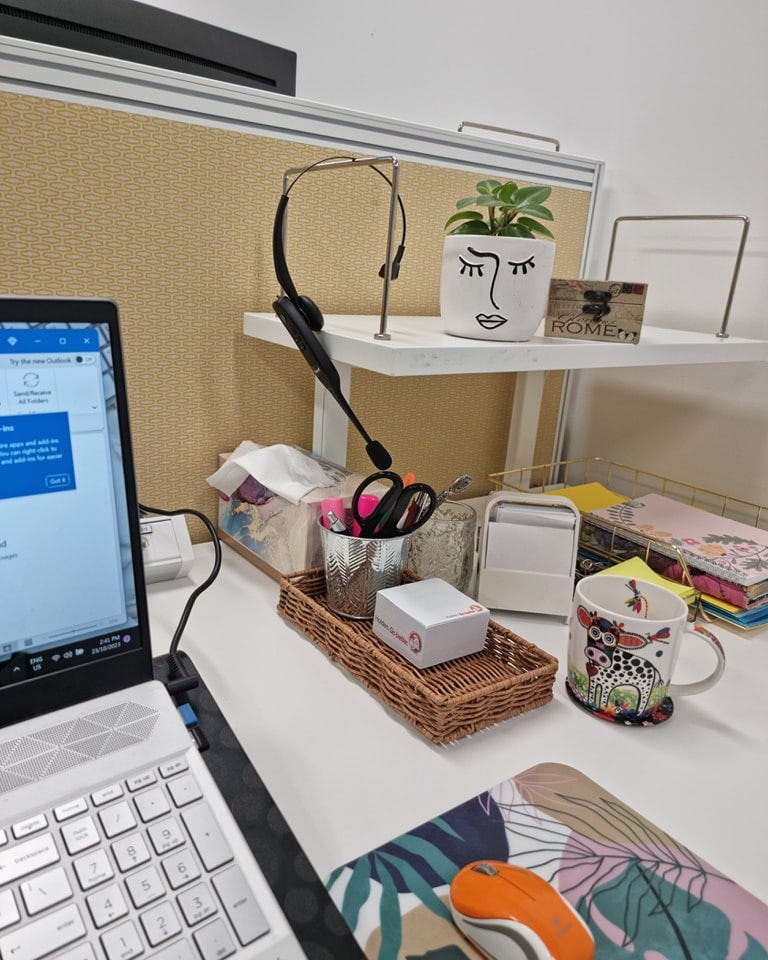
I have been lucky enough to work from home since I started my business 14 years ago and I’ve managed to develop a rhythm which works for me — not against me.
When I started out, I bought into every neurotypical productivity rule I could find. I felt I should set working hours and stick to them. I tried all the “train your brain” tactics to trigger some imaginary “good employee” response and fool myself I was attending a regular workplace. I’d had plenty of practice being an employee, so I knew the drill. I got up in the morning, showered, dressed, grabbed breakfast and left by the front door. Then I walked off the porch, along the driveway and back up again, let myself in and turned left into my office.
I’m not sure who I was trying to fool, but it ended up making me laugh at myself and I gave up after a week. My brain simply does not work like that.
Then I used a time book. Clocked myself on and off like I was punching a factory card. I had designated morning tea and lunch breaks, but I’d go back into the main part of the house to grab a coffee and a sandwich. Then I went through a phase of using an old coffee maker in the office and keeping a tin of biscuits on hand.
I was strict on myself. Housework was left until after hours, despite my entire body screaming to stick a load of washing in the machine or soak some dishes in the kitchen sink. My only exception was taking the dog outside when my husband wasn’t home to do it — which, honestly, was probably the only reason I left my chair some days.
Who was I kidding! I was at home. I was my own boss and the only person I needed to answer to was myself. My clients didn’t care if I worked away at their projects in the evening or at weekends — only that I got the jobs done. But more importantly, I was burning through executive function pretending to be someone with a “normal” brain who could just sit still for eight hours.
I had swapped one inflexible workplace for another cage.
Before the burnout got the better of me, I came to a realisation. Despite many work-from-homers insisting the only way to manage a day was to treat the situation as if we really were working in someone else’s office, I know this to be nonsense — especially if you’re neurodivergent.
We work from home. It’s a fact. All the trappings of a household are around us and instead of ignoring them until a designated workday is finished, we can build them into our day in ways that support our wildly variable attention, energy and focus. For ADHD brains in particular, the environment you work in isn’t a distraction to be managed — it’s a resource to be used.
You don’t even have to get dressed for it!
Mind you, I’d recommend putting away the PJs for something slightly more grown up if you’re meeting with clients face to face, but here are the tips I have come up with which work for me and my beautifully scattered brain:
For Zoom meetings: Brush your hair, put on lipstick if that’s what you’d normally do face to face, and a clean top — don’t worry about pants or shoes. Wear your slippers and trackies because no one will see! The sensory comfort helps me focus on the conversation instead of fighting uncomfortable clothes.
Clothes: If putting on “proper” work clothes triggers your brain into work mode, then do it — but keep the slippers on if you want. If waistbands and structured shirts make you want to crawl out of your skin by 10am, don’t wear them. Work all day in your track pants and a t-shirt if that suits your sensory needs. No one will see. Just brush your hair in case a neighbour calls! Your brain works better when your body isn’t sending distress signals.
Housework: Do what you can when you feel like it. Pop a load of washing in the machine and walk away. Walk back later and hang it on the line or stick it in the dryer. Go back again later still and put your lovely clean laundry away. These little bursts of movement give your brain a dopamine hit and let you come back to your desk with fresh eyes. For those of us who struggle with task switching, household micro-tasks can be the perfect bridge between deep-focus sessions.
Meals: Think about easy to plan and make meals during the week. Do some pre-prep, pop something in the slow cooker. Decision fatigue is real and if your executive function is already spent on client work, you don’t want to stand in front of the fridge at 6pm staring into the void.
Breaks: Make sure you take proper breaks. Get up and stretch. Take the dog outside. Eat a proper healthy lunch. Set a timer if time blindness means you “just need five minutes” and suddenly it’s an hour later. Movement isn’t slacking off — it’s how ADHD brains regulate and refuel.
If you have a To Do list, keep working through it, but don’t feel you have to sit at your desk all day without moving around. Take a few minutes to do some minor housework if it’s bugging you. Work your day around the notion that you are at home and able to do some things in the background while you get on with client work.
Your interest-based nervous system wasn’t designed for eight hours of motionless output. Working from home is the most amazing game changer, but only if we stop trying to squeeze our neurodivergent brains into neurotypical-shaped containers and start designing days that actually fit who we are.
If you enjoyed this and want to go deeper into building routines and rhythms that actually work for your brain, come and join us inside The Dandelion Clock membership. Every month we explore a new theme — like decision fatigue, time blindness and energy management — supported by weekly Seeds, a strategy companion, workbook prompts and community calls where we figure this stuff out together. No rigid rules. Just tools that fit real neurodivergent life.
You can find all the details and sign up here: The Dandelion Clock