

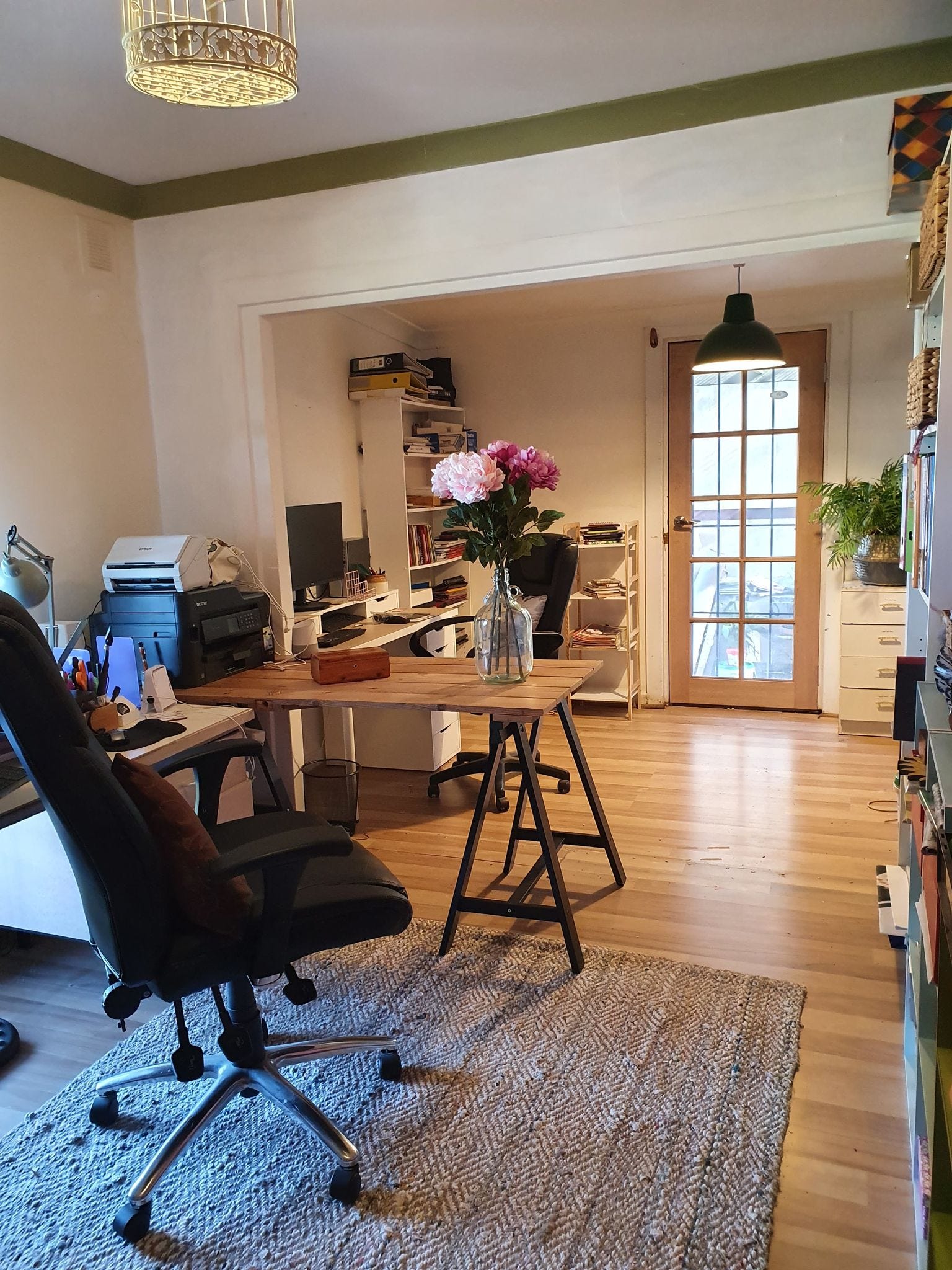
I have been lucky enough to work from home since I started my business 14 years ago. Over that time, I have managed to develop a routine which actually works for me and my beautifully scattered brain.
But it certainly didn’t start out that way.
When I first started out, I felt I had to set strict working hours and stick to them. I tried all the traditional ‘train your brain’ tactics to trigger a compliant employee response and fool myself into believing I was attending a regular corporate workplace.
I had years of practice being an employee so I knew the drill. I got up in the morning, showered, dressed, grabbed breakfast and walked out the front door. Then I walked off the porch, down the driveway, turned around, let myself back in and turned left into my office.
I am not sure who I was trying to fool but it ended up making me laugh at myself and I gave up after a week.
Then I tried using a time book. I literally clocked myself on and off. I had scheduled morning tea and lunch breaks, but I would go back into the main part of the house to grab a coffee and a sandwich. I went through a phase of keeping an old coffee maker in the office along with a tin of biscuits just to avoid the kitchen.
I was so strict on myself. Housework was left until after hours despite my longing to stick a load of washing in the machine or soak some dishes in the sink. My only exception was taking the dog outside for her usual needs.
Who was I kidding? I was at home. I was my own boss and the only person I needed to answer to was myself. My clients didn’t care if I worked away at their projects in the evening or at weekends. They only cared that I got the jobs done.
I had simply swapped one inflexible workplace for another.

Before the madness got the better of me, I came to a realisation. Many work-from-homers insist the only way to manage a day is to treat the situation as if we really are working in someone else’s office. As neurodivergent business owners we know this to be absolute nonsense. Trying to force our brains into a rigid corporate box just leads to executive dysfunction and burnout.
We work from home. It’s a fact. All the trappings of a household are around us. Instead of ignoring them until a designated workday is finished, we need to build them into our day. We are happier and far more productive for it.
While I do enjoy heading into my co-working space in Gawler sometimes, my home office days are all about working with my energy rather than against it. You don’t even have to get dressed up for it!
Here are the boundaries and flexible routines I have developed over the last 14 years:
The Zoom Mullet: Brush your hair, put on lipstick if that is what you normally do face to face and wear a clean top. Do not worry about pants or shoes. Wear your slippers and trackies or even pj bottoms, because no one will see!
Sensory-Friendly Clothing: If you feel more professional and ‘worky’ by putting on proper work clothes then do it (keep your slippers on if you want though). If you want to work all day in your track pants and a comfortable t-shirt then do that. Just brush your hair in case a neighbour knocks on the door.
Micro-Step Housework: Do what you can when you feel like it. Use the Kaizen approach of small incremental gains. Pop a load of washing in the machine and walk away. Walk back later and hang it on the line. Go back again later still and put your lovely clean laundry away. Letting yourself do minor chores in the background actually gives your brain a chance to process client work.
Zero-Decision Meals: Think about easy meals during the week to save your executive function. Do some pre-prep or pop something in the slow cooker so you don’t have to think about it at 5pm.
Proper Breaks: Make sure you take real breaks. Get up, stretch, take the dog outside. Eat a proper healthy lunch away from your screens.
If you have a To Do list keep working through it, but don’t feel you have to sit at your desk all day without moving around. Take a few minutes to do some minor housework if it’s bugging you, work your day around the notion that you are at home and able to do some things in the background while you get on with your client work.
Working from home is the most amazing game changer for a busy brain, but only if we take advantage of the freedom it offers.
Everything in this post resonates. These are good tips for anyone working at home, neurodivergent or not.
I never thought I'd be able to work at home. Didn't think I'd have the discipline. I definitely would have set up an office, kept office hours, clocked in and out etc, and tried to keep work life and home life very separate, exactly as you describe. Then having children merged into working at home and now I like it.
You are right; it's actually very helpful to do household jobs around work jobs, more so than being at work the whole time. The brain stays on task, but the little break brings clarity and you return to your desk refreshed.