

I like a good rabbit hole. It leads to interesting places, unexpected ideas, and the occasional triumphant "aha!" moment. But sometimes a brain that runs off at tangents is more nuisance than help.
I run a monthly online membership group for older diagnosed women with ADHD - diagnosed or not - and at our last session we talked about strategies to manage time blindness. You know those times when you're so immersed in what you're doing, even if it's just staring out the window at the clouds, that you forget how quickly time passes? We can lose ourselves in our tasks, pleasurable or not. Reading, watching a movie, scrolling social media, writing, or deep work of some kind. Then something distracts us and we look at the clock in horror. How could so much time have passed unnoticed?
The other night I was listening to an audiobook. Because I can listen and do something else at the same time, I was immersed in electronic colouring in - don't ask, but it helps calm my mind. I'd started listening and colouring around 9:30pm. I got thirsty and thought I'd grab a drink, looked at my watch, and it was 2:45am. More than five hours had passed. I know this is extreme, and this amount of immersion hardly ever happens, but in my defence, it was a good audiobook.
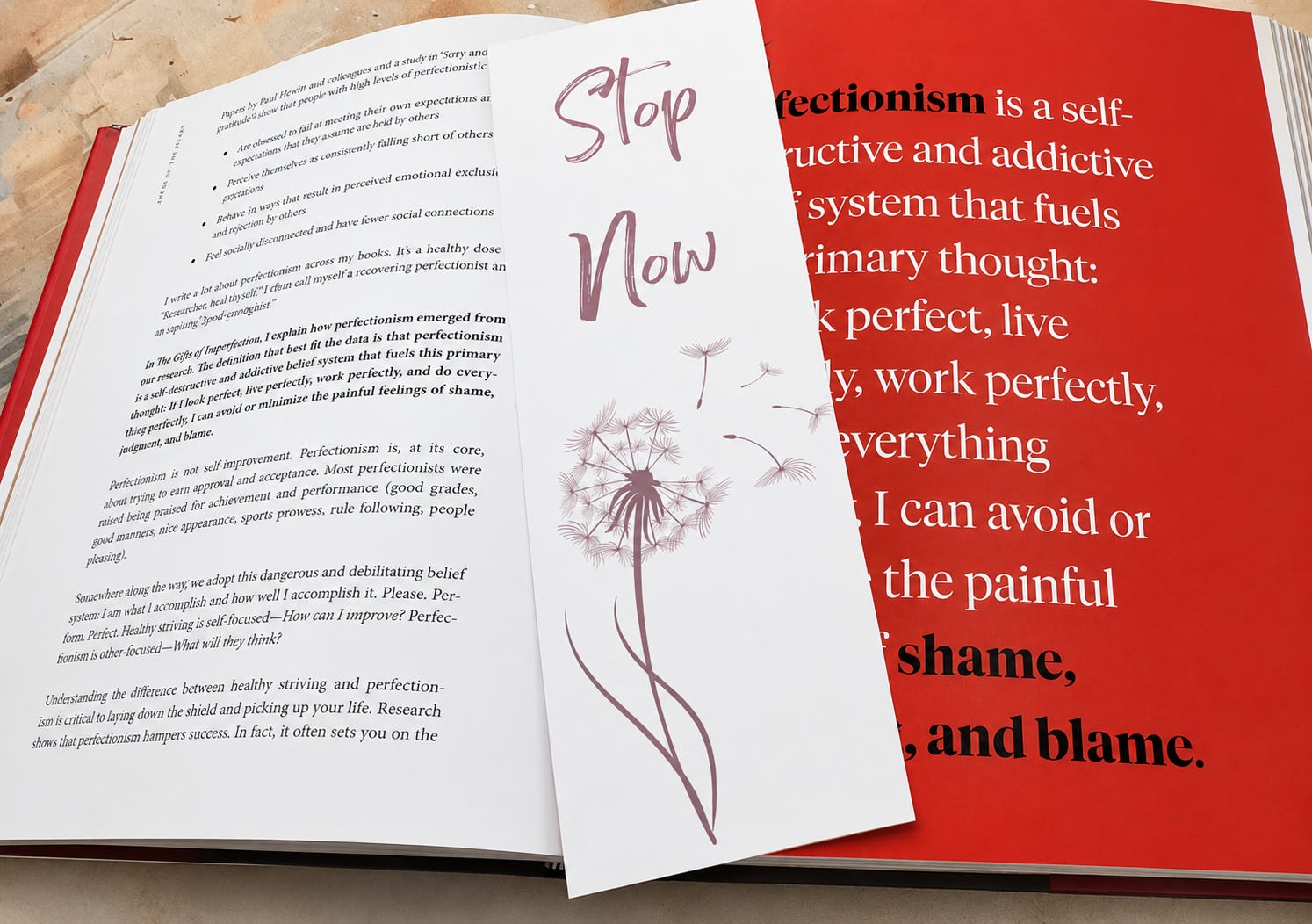
Going back to our group discussion at The Dandelion Clock, reading was brought up as one of the sinkholes we can often fall into. When I listen to an audiobook, I can put on a timer which stops the narration at a certain point. I suggested that with a physical book it might work if we wrote "STOP NOW" in large letters on a piece of paper and inserted it into the pages where we considered it a good time to stop. It would be a physical reminder to bring ourselves out of the book. I didn't think an alarm or loud timer would work very well, as the whole point of reading and immersing ourselves in someone else's words is for enjoyment or knowledge, and a loud bell would be intrusive and startling.
So here came the rabbit hole. Having decided that in theory the piece of paper would work, I then had to find out how many words the average reader consumes in a 30-minute block, because otherwise how could I work out where to slip the note in the pages. Then I had to research how many words appear on every page of the average printed book. Whilst I was doing this fascinating research I was faced with several possibilities - fiction books have fewer words per page, non-fiction and academic texts have slightly more due to denser layouts, and graphic novels or comic books have fewer again. Then my research offered to give me the information for my current reading list. So of course I started putting in the names of the books I am reading and some which are on my to-be-read pile.
Suddenly a whole bunch more time had passed while I was doing the research.
How often does this kind of rabbit hole action happen to you?
And just for your interest, here's some of what I found out:
- The average adult can read about 7,140 words in 30 minutes.
- Silent reading runs at about 238 words per minute for general non-fiction.
- Fiction typically runs 250-300 words per page.
- Non-fiction and academic texts run 300-400 words per page.
Using the average reading speed, a 30-minute reading session lets you finish roughly 23-28 pages of a standard book. So I should be able to read 15-20 pages of Brené Brown's "Atlas of the Heart" in 30 minutes, and Mick Herron's spy thriller "Slow Horses" will see me consume 24-28 pages in the same amount of time.
Which brings me to the real point of all this: the research wasn't the problem. The problem was that I started with a practical idea - the "STOP NOW" bookmark - and got pulled into the weeds before I ever tested it. This is the double edge of the ADHD rabbit hole. We start with a solution, get curious about a detail, follow that detail into a labyrinth, and emerge hours later with a head full of facts and no action taken.
Does that sound familiar?
The "STOP NOW" bookmark might work brilliantly. It might fail completely. The only way to know is to try it. But trying it requires stopping the research, accepting "good enough" information, and actually inserting that piece of paper into a book.
Here are a few thoughts for taming the useful-but-exhausting rabbit hole habit:
1. **Set a timer before you research.** Ironic, given the topic, but give yourself 10 minutes to satisfy your curiosity. When the timer goes off, make a choice: keep going and accept the time cost, or park the question and move on.
2. **Write the question down.** If a detail grabs you, scribble it on a sticky note or in your phone. "Look up average words per page later" is a perfectly valid plan. It lets your brain let go of the need to answer it immediately.
3. **Ask: does this serve the original goal?** Before you go three layers deep into a topic, pause and check. Does knowing the exact word count per page of a spy thriller help you stop reading at a reasonable hour? Probably not. Park it.
4. **Test the idea first, perfect it later.** My "STOP NOW" idea doesn't need precise page calculations to be useful. I could have tested it with a rough guess and refined later. Done is better than perfectly researched.
The truth is, rabbit holes aren't all bad. They're where creativity lives. They're where we make unexpected connections and find solutions we didn't know we needed. But for those of us with ADHD brains, the challenge isn't avoiding the rabbit hole - it's choosing which ones to enter, and knowing when to climb back out.
So next time you find yourself five layers deep in a topic you didn't mean to explore, remember: curiosity is a gift. Time blindness is a trick. And a simple piece of paper with "STOP NOW" written on it might be the most powerful tool in your drawer.
If you'd like to explore time blindness and other ADHD strategies with a group of women who truly get it, come and join us at The Dandelion Clock. We meet monthly, and there's always room for one more wandering mind.