

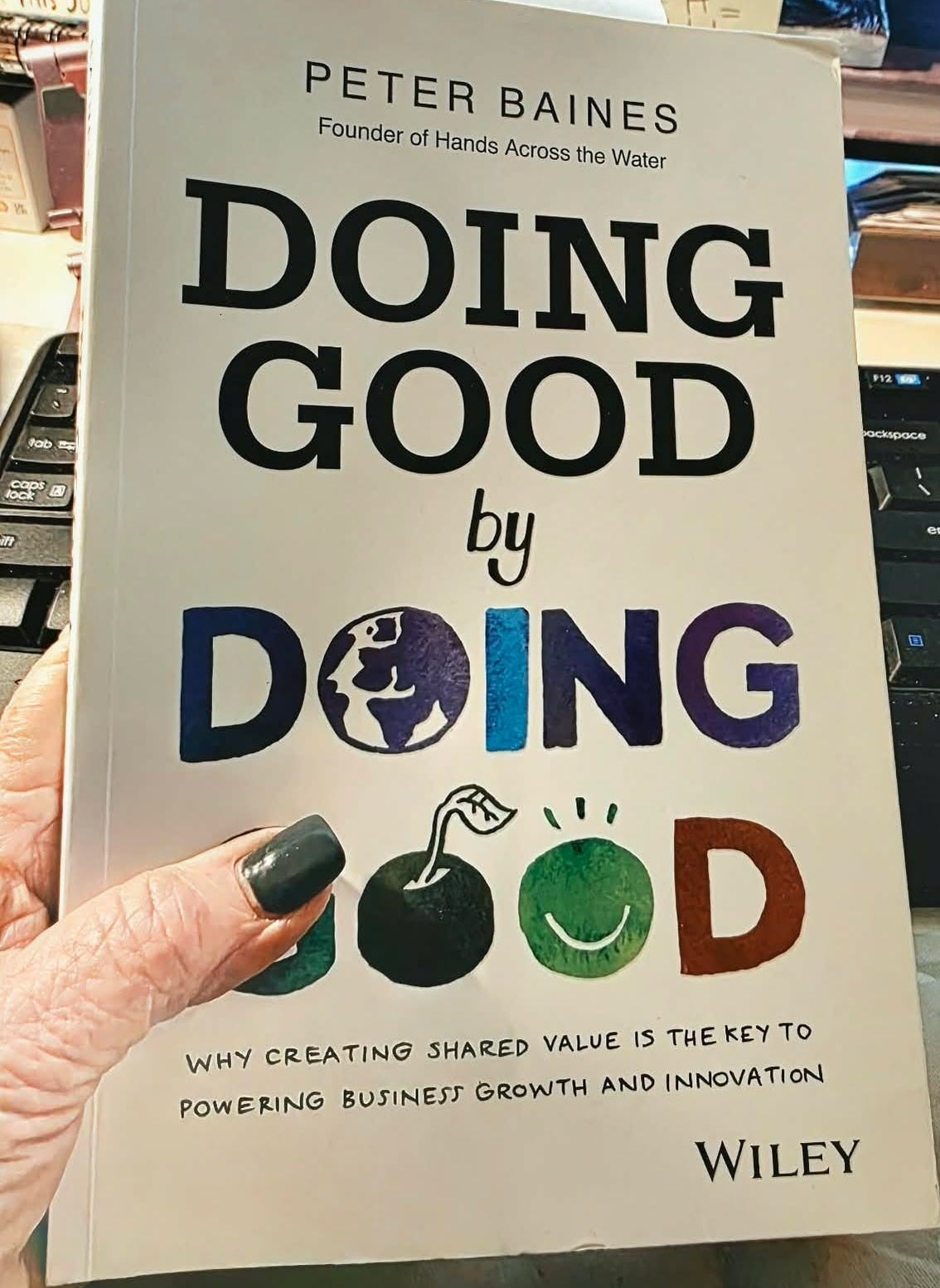
I was lucky enough to win a copy of a great book, ‘Doing Good by Doing Good’ by Peter Baines, a few years ago. It talks about the importance of having strategies in your business which can help organisations transform the communities they work with through charitable activities.
As a solo-preneur I don’t have a corporate structure of employees to help me give back to my community, but that shouldn’t stop anyone from giving back.
I’ve always been one of those people who put their hand up for everything - from helping in the school canteen when I could, to getting involved in kids pony club, Little Athletics and other organisations when my kids were school age. Back then I just thought I was helpful. Now I know that’s what an ADHD brain does: it spots a need, lights up, and dives in before anyone can ask twice.
Then my focus turned to being an active member of a local service club, Zonta International. Zonta focusses on empowering women worldwide to be the best they can be, raising them up through education, health initiatives and more. Our local club closed some years ago and I am no longer a Zontian, but I still support their initiatives.
I’ve been a member of a small, but dedicated committee bringing an annual readers and writers festival to the rural South Australian region where I live, and in between these ‘official’ involvements have given a hand where I can in the areas I have some expertise in. I can’t seem to help myself. I know, too, that I find it hard to say ‘no’ - something I keep working on. Saying no is extra tricky when your brain finds every new cause genuinely interesting. If you have a brain like mine, you’ll know the feeling.
As a business owner I have given back by lending my expertise to various community groups over the years. I’ve been a volunteer mentor with the South Australian Office of the Chief Entrepreneur, and am a volunteer mentor with Veterans SA through a program assisting veterans and their family members develop small businesses or re-enter the workforce.
A strong volunteering culture in all communities enriches everyone, both the volunteer and the recipients. Whether you get involved in environmental initiatives, taking care of local parklands and gardens, deliver Meals on Wheels, run classes for the University of the Third Age, bake for trading tables, or myriad other things, you are improving your personal wellbeing as well as the lives of those around you.
Running our own businesses can be time consuming and it’s hard to make a space for additional work, but even the smallest contribution can have a huge impact. If your brain scatters as easily as mine, pick one thing and one commitment. One thing done well beats five things half-finished, and a scattered brain is far happier with a single clear focus than a guilty list.
If you don’t want to commit to regular involvement in a service club or other organisation, think about offering a couple of hours of assistance to a local project. Sure, you can donate money or products to help out, but it’s a lot more satisfying to donate some of your time.
Some ideas, which can involve your employees too if you have a small workforce, include running a Biggest Morning Tea for cancer research, getting involved in the Leukaemia Foundation’s World’s Greatest Shave (volunteer a spouse, partner or relative and help them fundraise) and other great fundraisers.
If you have specific business skills you could offer to create a logo for a community group, do some marketing for them, write a media release, help with social media, look over their books, service a vehicle for a charity organisation, donate items to an op shop - the ideas are endless. And along the way you will reap the benefits of getting your business associated with giving back.
Sometimes we get so involved in our own business lives we forget that even really small moves make big impacts, and the rewards can be huge.
On a purely selfish level, I sometimes support organisations just so I can feel good and reap some commercial benefit by getting my business name out and about - just because we give back doesn’t mean we need to do it silently.
Although many people think it’s more important to be anonymous with their donations, I don’t agree. I think it’s important to show up and speak up. If we help out and are recognised for it, it encourages others to do the same. Somehow, when donations or support appear under a veil of secrecy I don’t believe it has a huge knock-on effect. I’d rather see people say to themselves “If they can do it, I can do it”. That’s especially true for the late-diagnosed women I work with. Seeing someone with a brain like yours out there doing the thing makes “I can do it” feel possible.
Put yourself out there, look for small opportunities to make change. Take things to the food bank, donate a raffle prize, offer a small service and when you can proudly say that’s what you did. Add your generosity to your website, tell the world, because if we all take a small step it can become a mountain of good.
And if you’re a late-diagnosed woman building a business around a beautifully scattered brain, you’ll find your people in The Dandelion Clock, my membership for women just like you. One theme a month, a workbook each week and a small group who get it. Come and join us at thedandelionclock.com.au